Yoruba Root: Making learning yoruba easier for everyone

Role:

Product Design

Industry:

Education

Duration:

8 weeks

Overview

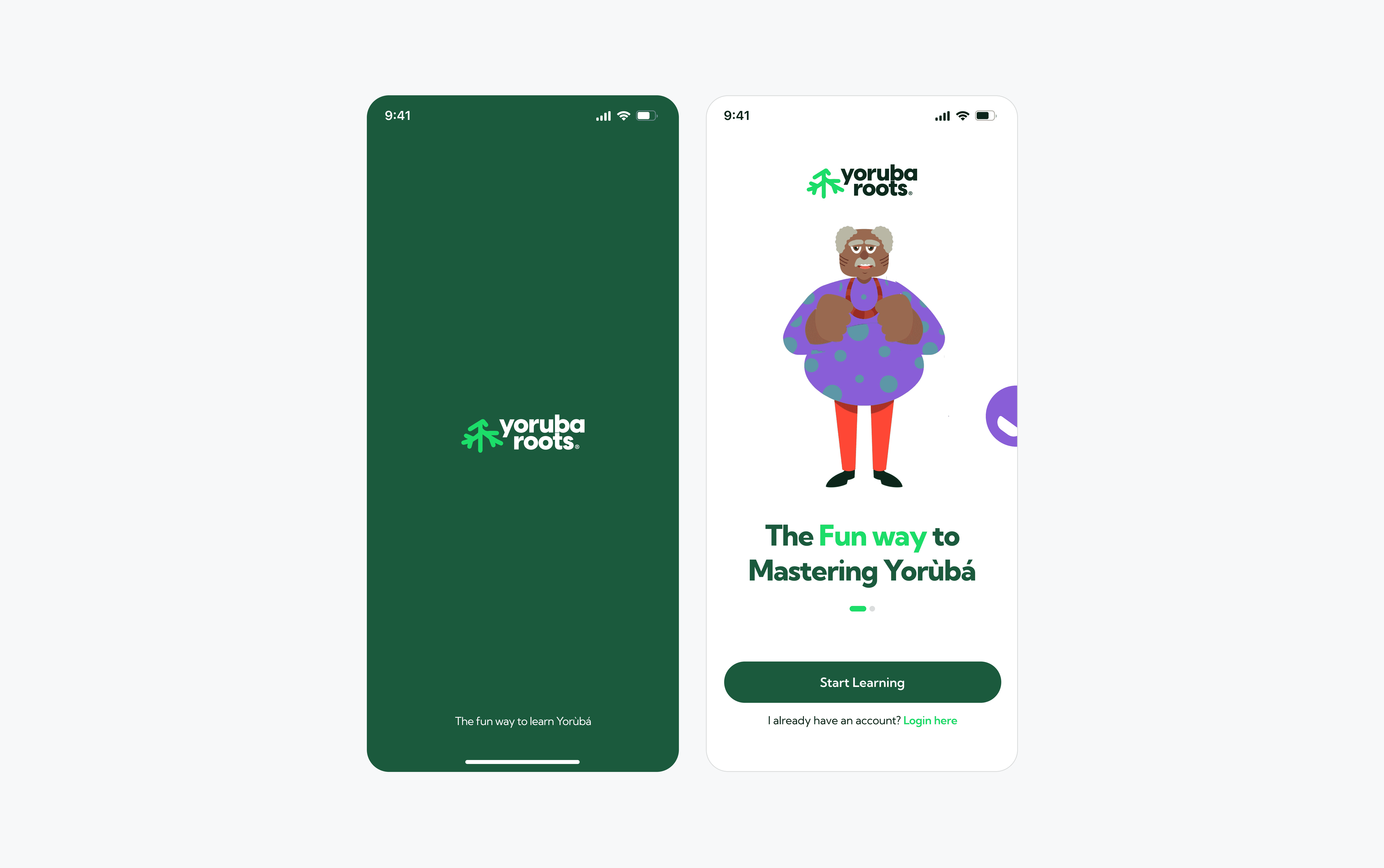
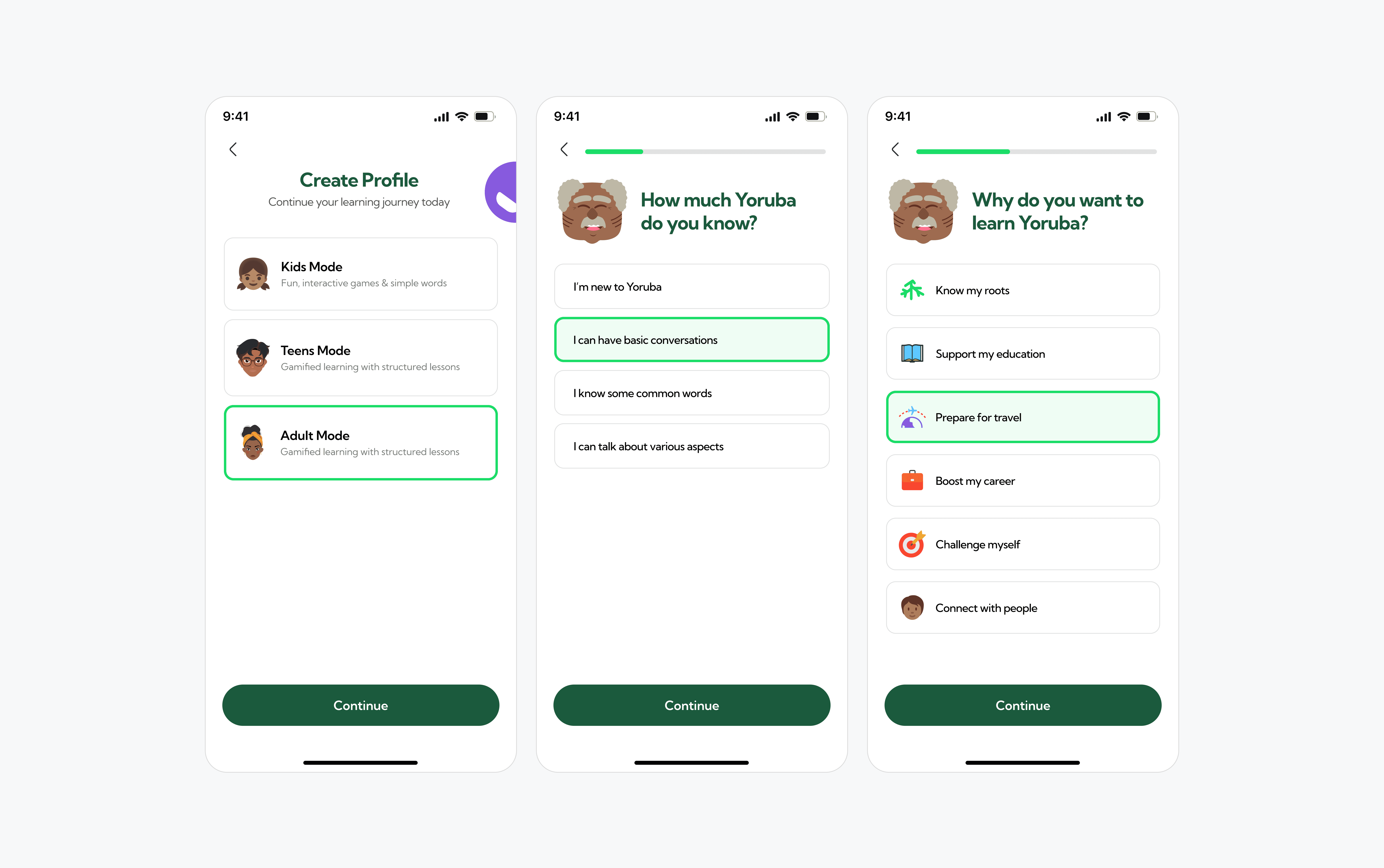
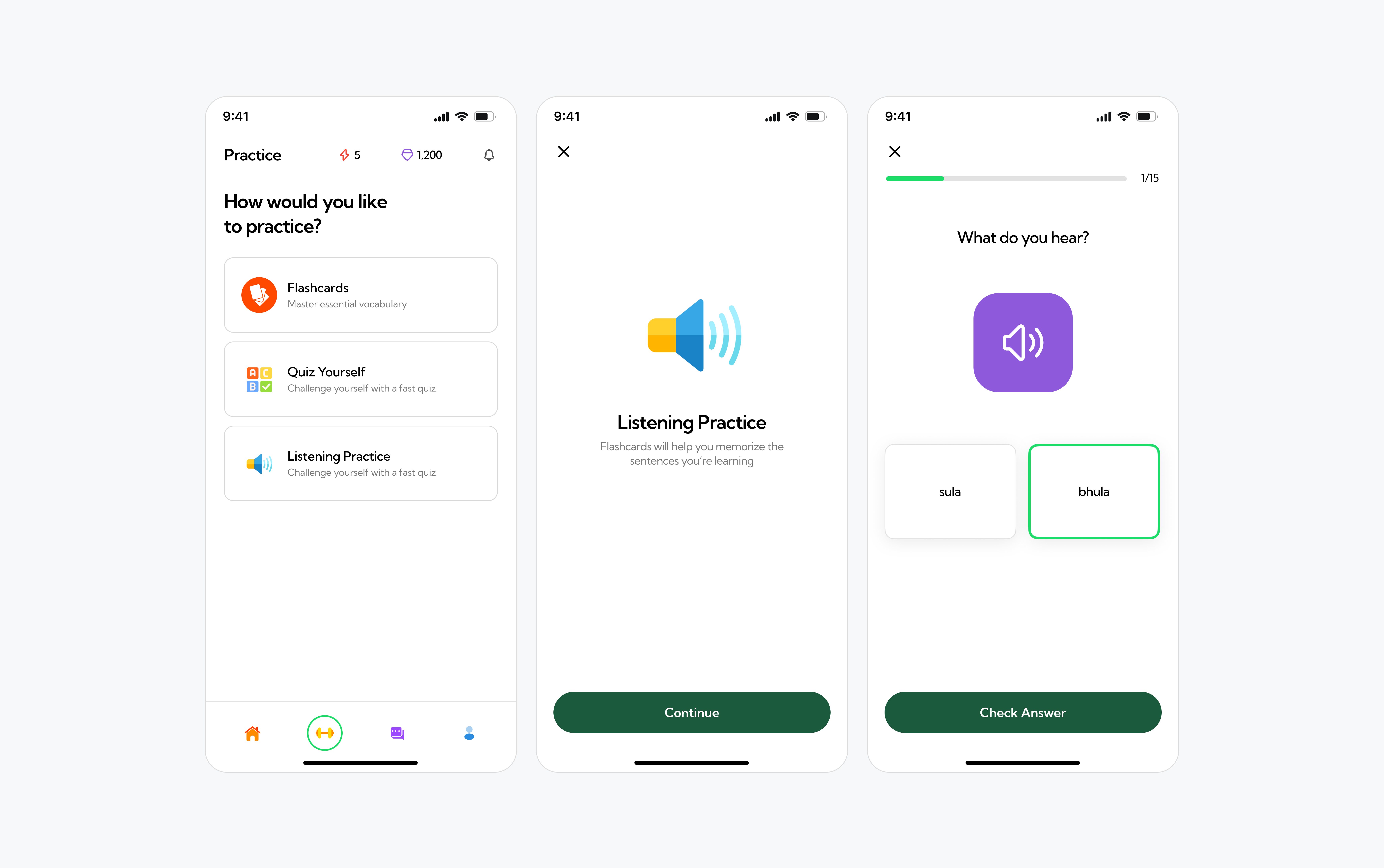
This project involved designing a Yoruba language-learning app that makes learning the language simple, engaging and accessible. The app helps users develop everyday vocabulary, pronunciation and conversational skills through structured lessons, audio guidance and interactive exercises.

The Challenge

Many Yoruba learners struggle to find modern and well-structured learning resources. Because Yoruba is a tonal language, users may also find pronunciation, tonal marks and word meanings difficult to understand. Existing solutions may lack cultural context, engaging practice and a clear learning path.

The Solution

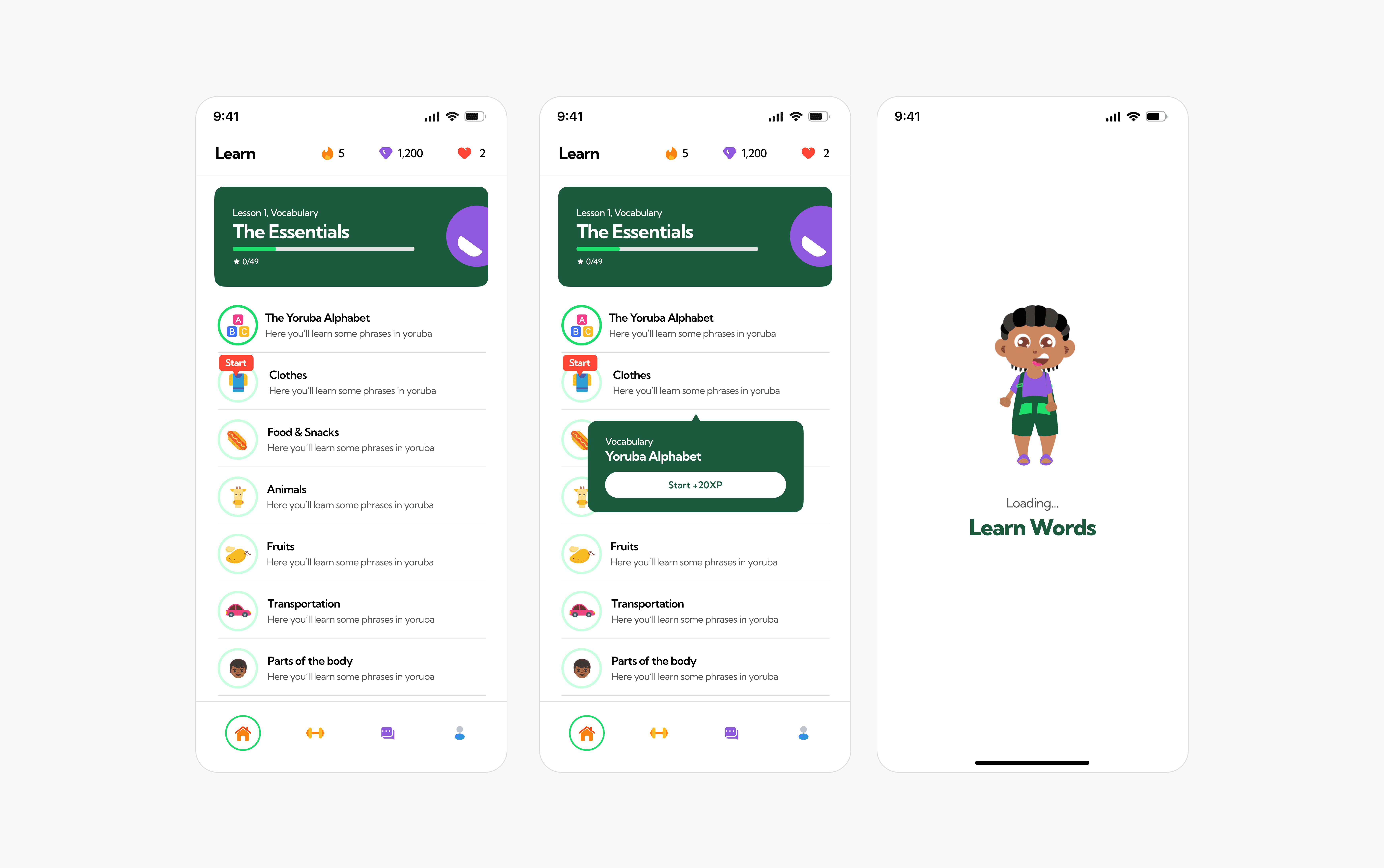
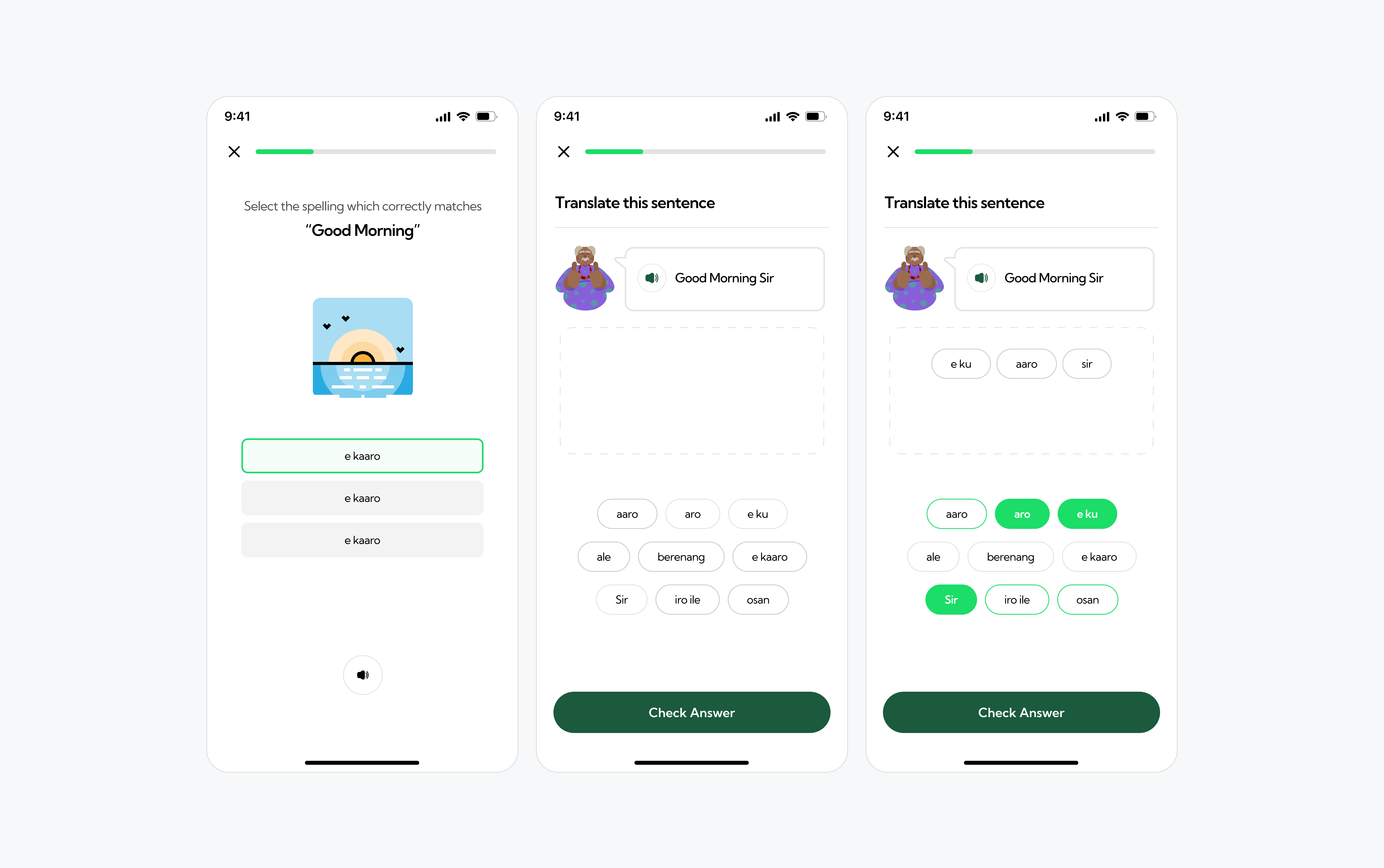
I designed an intuitive learning experience that breaks Yoruba into short, manageable lessons. The solution combines native-speaker audio, pronunciation practice, quizzes, vocabulary review and progress tracking to help users learn consistently and confidently.

Research & Insights

To better understand the needs of Yoruba learners, we conducted user interviews, reviewed existing language-learning platforms and studied how people currently learn Yoruba through family, online videos, books and informal lessons. The research focused on learners’ motivations, preferred learning methods, challenges with pronunciation and the features that could encourage consistent practice.

The research revealed that many users were interested in learning Yoruba to communicate with family, reconnect with their cultural identity or participate more confidently in everyday conversations. However, they often found available learning materials unstructured, overly academic or lacking sufficient audio support.

Since Yoruba is a tonal language, pronunciation emerged as one of the most significant challenges. Learners needed to hear words spoken clearly and repeatedly, while also seeing the correct tonal marks. Users also preferred short, practical lessons based on real-life situations such as greetings, introductions, shopping and family conversations rather than memorising isolated words.

Another important finding was that learners needed a visible sense of progress to remain motivated. Features such as lesson completion indicators, quizzes, revision activities, streaks and achievement milestones were identified as helpful for building consistent learning habits.

To better understand the needs of Yoruba learners, we conducted user interviews, reviewed existing language-learning platforms and studied how people currently learn Yoruba through family, online videos, books and informal lessons. The research focused on learners’ motivations, preferred learning methods, challenges with pronunciation and the features that could encourage consistent practice.

The research revealed that many users were interested in learning Yoruba to communicate with family, reconnect with their cultural identity or participate more confidently in everyday conversations. However, they often found available learning materials unstructured, overly academic or lacking sufficient audio support.

Since Yoruba is a tonal language, pronunciation emerged as one of the most significant challenges. Learners needed to hear words spoken clearly and repeatedly, while also seeing the correct tonal marks. Users also preferred short, practical lessons based on real-life situations such as greetings, introductions, shopping and family conversations rather than memorising isolated words.

Another important finding was that learners needed a visible sense of progress to remain motivated. Features such as lesson completion indicators, quizzes, revision activities, streaks and achievement milestones were identified as helpful for building consistent learning habits.

To better understand the needs of Yoruba learners, we conducted user interviews, reviewed existing language-learning platforms and studied how people currently learn Yoruba through family, online videos, books and informal lessons. The research focused on learners’ motivations, preferred learning methods, challenges with pronunciation and the features that could encourage consistent practice.

The research revealed that many users were interested in learning Yoruba to communicate with family, reconnect with their cultural identity or participate more confidently in everyday conversations. However, they often found available learning materials unstructured, overly academic or lacking sufficient audio support.

Since Yoruba is a tonal language, pronunciation emerged as one of the most significant challenges. Learners needed to hear words spoken clearly and repeatedly, while also seeing the correct tonal marks. Users also preferred short, practical lessons based on real-life situations such as greetings, introductions, shopping and family conversations rather than memorising isolated words.

Another important finding was that learners needed a visible sense of progress to remain motivated. Features such as lesson completion indicators, quizzes, revision activities, streaks and achievement milestones were identified as helpful for building consistent learning habits.

Product showcase

Learnings

This project taught me that designing a language app is not just about teaching words, but creating an experience that connects users with culture and communication. Overall, the project showed me how thoughtful design can make learning a language easier, more enjoyable and more meaningful.

Create a free website with Framer, the website builder loved by startups, designers and agencies.